

Writers have long been used by advertisers to lend products a sense of intelligence, cultural weight, and authority. Walt Whitman’s voice sold Levi’s. Shakespeare has been quoted in ads for vodka and tech. Hemingway was used to sell beer. Maya Angelou partnered with Hallmark. Mark Twain and Charles Dickens were invoked for everything from Americana to household goods. William S. Burroughs lent his voice to Nike.
Dutch fits squarely in that lineage. He brought credibility without pretense, cool without affectation, and a directness that aligned with mass-market appeal. He wrote smart, grounded fiction that spoke to both serious readers and general audiences. For advertisers, he offered the rare combination of literary standing and wide recognition—someone who could elevate a campaign without making it look like one.
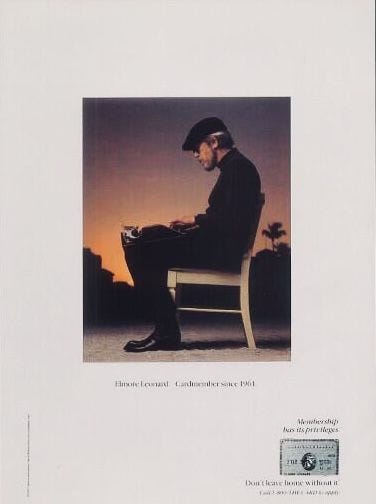
In the late 1980s, Leonard became a face of American Express. As part of the brand’s “Portraits” campaign, he was photographed by Annie Leibovitz in a stylized image that would come to define his public persona. The famed celebrity photographer photographed Dutch on Miami Beach at sunset, seated on a chair, typing on a portable typewriter. The photo ran widely in national newspapers and magazines under the American Express banner. It was also the back cover photo for the 1988 Arbor House edition of Freaky Deaky. Image-building, plain and simple—Dutch cast as the serious, solitary writer.
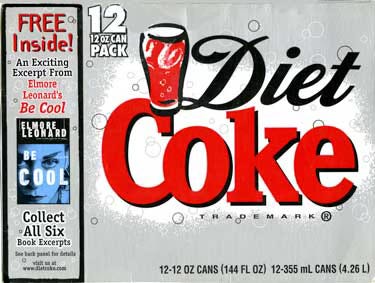
A decade later, his name and work were again used to promote consumer products, this time in direct alignment with retail. In early 1999, Dutch’s novel Be Cool, the sequel to Get Shorty, became the centerpiece of a national Diet Coke campaign. A pocket-sized book was inserted into 12- and 24-packs of Diet Coke, under the banner “Living Life to the Fullest.” Positioning the brand as being less about calories, and more about culture.
Dutch’s excerpt was featured alongside those by Maeve Binchy, Barbara Taylor Bradford, Jack Canfield, Nora Roberts, and Lisa Scottoline. The marketing rationale, according to one report, was that Diet Coke drinkers read an average of seven books a year, while “Classic Coke drinkers” only read one or two.
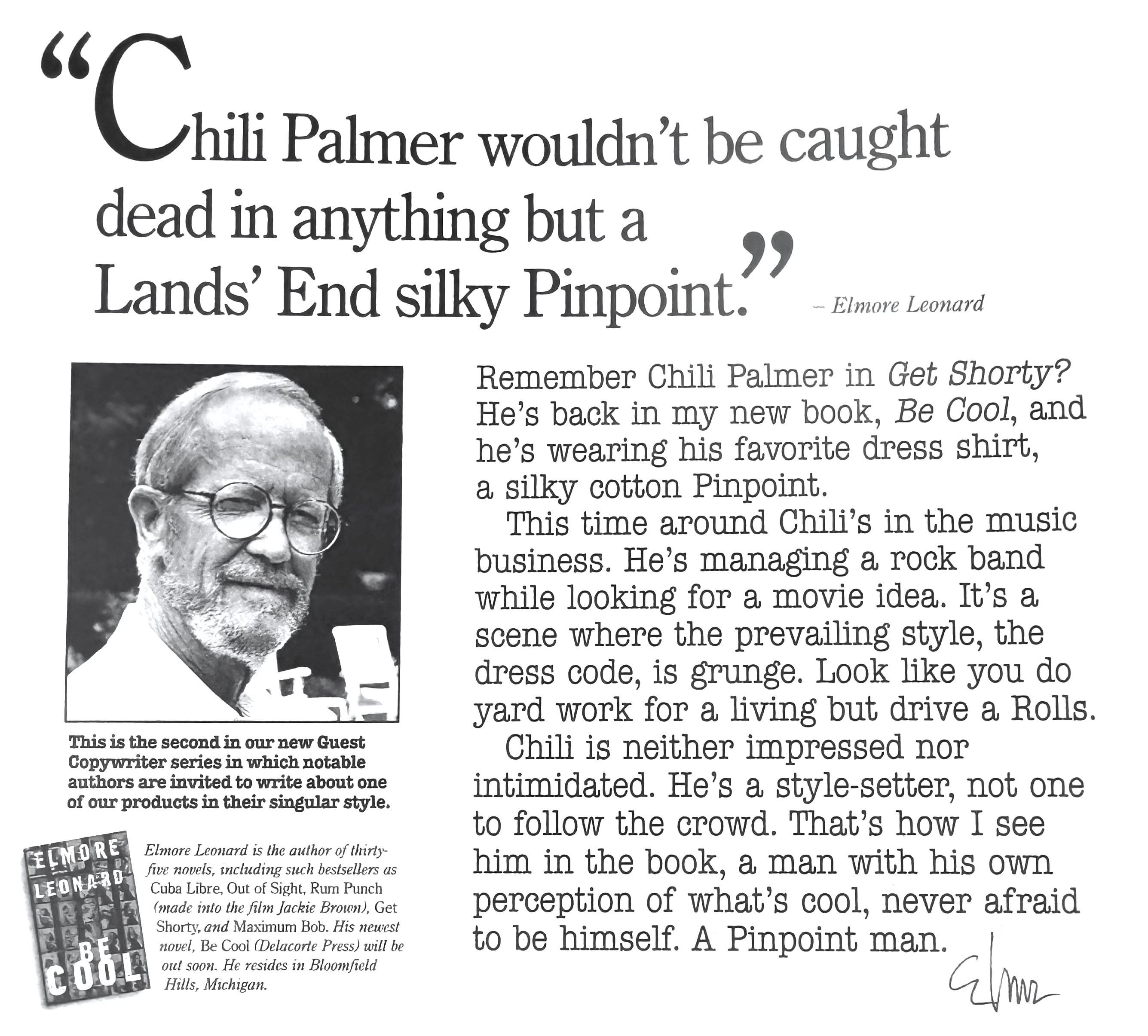
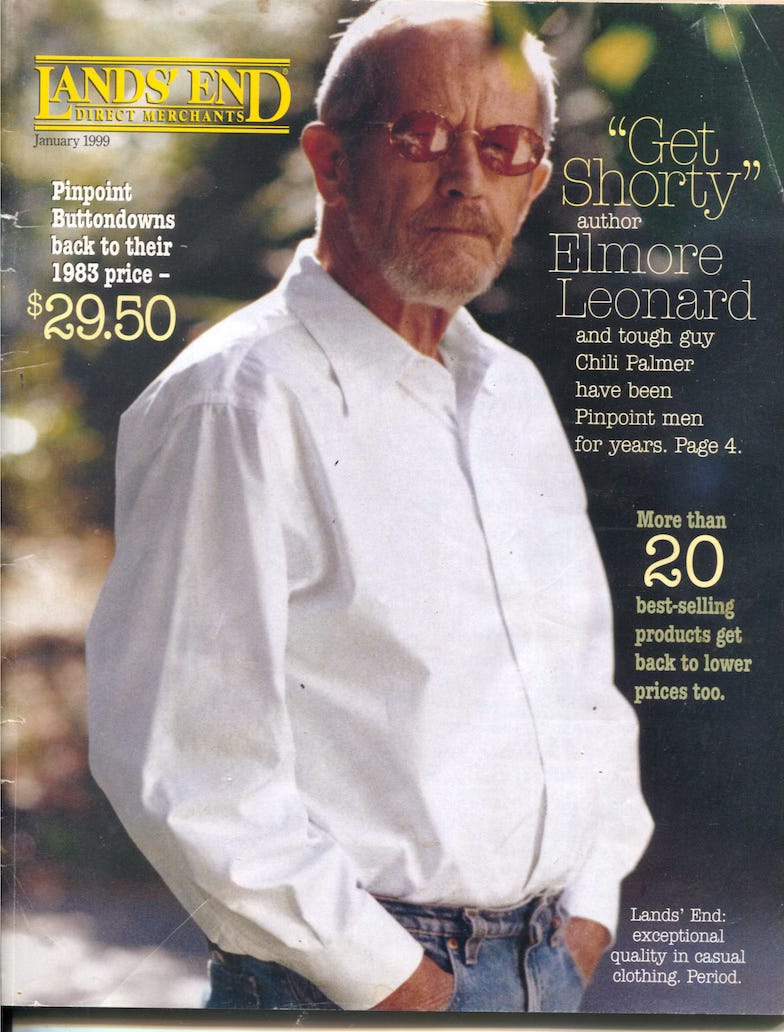
Around the same time, Dutch also appeared on the cover of the Lands’ End catalog, modeling a white pinpoint cotton dress shirt. The catalog included a short note written in the voice of Chili Palmer, calling him “a style-setter, not one to follow the crowd.” It was part of Lands’ End’s move toward using public figures in place of traditional models. Other recent covers had featured Oprah Winfrey, Hillary Clinton, and Jewel. Dutch’s appearance coincided with the release of Be Cool, and while the connection wasn’t direct, it further positioned Dutch as a recognizable figure beyond the literary world.
These three promotions—American Express, Diet Coke, and Lands’ End—have Dutch turning up in places you wouldn’t expect, but somehow fitting right in. If someone wanted to read his book while drinking Diet Coke, wearing a Lands’ End shirt, and paying for it with their American Express card, he was all for it.
As long as it sold books.